CASE STUDY: Building StoryTime Playgroup
StoryTime Playgroup (originally named Bea & Bop's Playgroup) was a new early childhood program designed for children ages 9–36 months, combining guided play, story-based learning, developmental skill-building, and beloved characters from the Story Time Learning catalog.
My role was to build a scalable curriculum from the ground up and create a teacher onboarding system, including a digital portal where instructional staff could access lesson plans, visual examples, training walkthroughs, and classroom-ready materials.
I designed this as a two-sided learning system: one experience for children, and one support system for the teachers responsible for bringing it to life.
*Confidentiality Note: Some original materials, internal platform visuals, and client details have been omitted or adapted due to confidentiality agreements. This case study focuses on my role, process, creative direction, learning design approach, and outcomes.

Art Direction, Curriculum Design & Teacher Training System for a Scalable Early Childhood Program

MY ROLE
Curriculum Designer, Learning Experience Designer, Art Director

THE AUDIENCE
Children ages 9–36 months; teachers and instructional staff

FOCUS AREAS
Early childhood development, guided play, story-based learning, teacher training, curriculum systems, digital learning portals

TOOLS & METHODS
Curriculum research, classroom observation, SME consultation, NAEYC-informed design, user testing, digital platform prototyping, visual instructional design
THE CHALLENGE
The program needed to serve two different learning audiences at once.
For children, the curriculum needed to support early developmental growth through playful, age-appropriate experiences focused on motor skills, language development, social interaction, emotional expression, and early classroom readiness.
For teachers, the system needed to make a brand-new curriculum easy to understand, prepare, and teach — even for instructors with different levels of experience. The curriculum had to be clear enough for new teachers to pick up quickly, while still structured and intentional enough for seasoned educators to trust and use consistently.
The larger business challenge was scalability: the program needed to work beyond one classroom or one instructor. It had to become a teachable, repeatable product that could eventually support schools, libraries, and learning centers.
THE APPROACH
I built the curriculum from the ground up using a combination of early childhood research, classroom observation, subject matter expert consultation, and play-based learning principles.
The curriculum was informed by CDC and NAEYC-aligned early childhood practices and by research into existing toddler and preschool programs. I visited classrooms, reviewed comparable curriculum models, and helped shape a scope and sequence that supported developmental progression for children ages 9–36 months.
To make the program feel ownable to Story Time Learning, I used the company’s existing story world and characters as the foundation for themed play-based lessons. Rather than creating generic toddler activities, each lesson used story, character, movement, music, visual prompts, and guided play to invite children into the experience.
This allowed developmental learning to feel playful, imaginative, and emotionally engaging.

Each lesson followed a structured instructional flow so teachers could move children through story, movement, play, reflection, and skill practice in a consistent way.
The goal was not only to entertain children, but to create intentional moments where they could practice emerging skills through repetition, imagination, and guided interaction.
Curriculum Design
I designed the curriculum to support growth across several early childhood domains, including:


Art Direction & Visual System
As Art Director, I shaped the visual experience of StoryTime Playgroup across curriculum materials, teacher resources, take-home materials for caregivers, classroom assets, and the digital portal.


The goal was to make the program feel playful, warm, and developmentally appropriate for very young children, while still giving teachers clear, accessible materials they could use with confidence.
I used Story Time Learning’s existing IP and character catalog as the creative foundation, translating beloved characters into themed lessons, visual prompts, classroom materials, and instructional slides. This helped the curriculum feel ownable to the brand while giving children a familiar story-based entry point into each activity.

The visual system needed to serve two audiences at once: young children, who needed simple, inviting, emotionally engaging visuals, and teachers, who needed clear hierarchy, easy navigation, and practical instructional support.


Playgroup Tutor:
Hannah

Training for Teaching Staff
In addition to the curriculum itself, I helped design a teacher onboarding system so instructional staff could confidently deliver the program.
This also included the development of a digital curriculum portal where teachers could access lesson materials, learning journeys, visual examples, slides, instructional guidance, and structured walkthroughs.
The portal was designed to make preparation easier and reduce uncertainty for teachers. Instead of handing instructors a static curriculum document, the system modeled how each lesson should flow and gave teachers the tools they needed to understand the purpose behind each activity.
The training experience helped teachers answer questions like:
What is the goal of this lesson?
How should I introduce the story?
What materials do I need?
What should I model for the children?
What developmental skills are being practiced?
How do I transition between activities?
What does successful facilitation look like?
Testing & Iteration
The digital portal and curriculum system were refined through feedback sessions and user testing with instructional staff.
Teacher feedback helped identify where the platform needed clearer navigation, stronger visual examples, or more direct preparation support. These insights informed improvements to the portal experience and helped make the curriculum easier to access, understand, and teach.
This testing process was especially important because the system needed to support teachers with different backgrounds, from first-time instructors to experienced educators.
.png)
Outcomes
Children
Making
Breakthroughs
Confident & Capable Teachers
A Program That Scales


In the classroom, children became more engaged with the activities and showed growth in confidence, communication, movement, peer interaction, and pre-school preparedness.
The program also helped teachers feel more prepared and confident. Instructors with varying levels of experience were able to learn the curriculum, understand the lesson structure, and begin teaching independently with greater consistency.
The curriculum and training system ultimately supported a scalable program model to be placed on a licensing portal and made available to schools, libraries, and early learning facilities.
This project demonstrates my ability to lead a complete educational product system — combining art direction, curriculum design, teacher training, digital learning experience design, and scalable implementation.

Proof of Concept
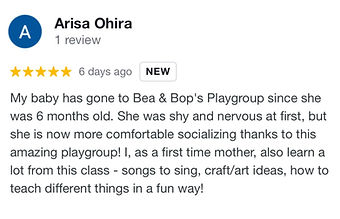
Kaede started Playgroup at 6 months old, not yet walking, new to socializing with others, and developing cognitive and verbal skills.
During her time in Playgroup, Kaede reached meaningful developmental milestones — including taking her first steps during class, becoming more socially engaged with peers, and building vocabulary through repeated songs and guided activities.
Read a review from her parent, and watch a featured video celebrating her progress:

More Reviews


